
Medically reviewed by our in-house trichology committee.
Ask someone why they picked saw palmetto over anything else on the shelf, and the answer almost never starts with a study. It starts with a worry. Usually some version of: I read what finasteride can do, and I’d rather not.
That is the real subject here. This supplement sells in the hair aisle but gets chosen on a risk calculation — and that calculation only works if the numbers going into it are right. Most of the numbers floating around are either missing or inflated, so let’s put the real ones on the table.
Why people actually reach for it
Saw palmetto, Serenoa repens, is an extract from the berries of a low-growing palm native to the southeastern United States. It has a long track record, but not on the scalp — it built its reputation in urology, as a comfort product for the urinary symptoms of an aging prostate. Its move into hair supplements is newer, and it rests on a one-line argument: it works on the same enzyme the hair loss drugs target, so it should do the same job.
The argument is not silly. It is incomplete, and the gap is where all the trouble lives.
Picture the usual sequence. A man watches his temples move back, sees a telehealth ad, gets as far as reading about finasteride, hits the list of sexual side effects, and closes the tab. What he wants next is something that works the same way, naturally. And that word is carrying a lot of weight in this sentence: it isn’t describing a property of the product, it’s describing the relief of the person buying it.
I’m not mocking that instinct — it is a reasonable thing to feel. But if you go down this road, know precisely what you are trading: how much efficacy you give up, and how much safety you may not actually gain.
What it does to 5-alpha-reductase
Male pattern loss comes down to one sentence. Testosterone gets converted into dihydrotestosterone — DHT — by an enzyme called 5-alpha-reductase. On a genetically susceptible scalp, that DHT shortens each cycle and shrinks the follicle a little more each time, until it produces nothing but fine, colorless fuzz.
Finasteride works by inhibiting one form of that enzyme. And liposterolic extracts of Serenoa repens have shown inhibitory activity against the same system in the lab. So the premise is genuine: this is not a plant picked at random to look botanical on a label.
What the word “inhibitor” quietly hides is the only question that decides anything: inhibits by how much, and in whom?
A compound can slow an enzyme in a dish and never reach, inside a living body, the concentration that would make the slowing matter. That story is ordinary in pharmacology, and it is exactly where the distance between a drug and a supplement opens up. Nobody, as far as I can find, has demonstrated in humans an inhibition comparable to a prescription anti-androgen. What we do know is far more modest — and what we don’t know is far larger than the marketing suggests.
The same enzyme-inhibition argument comes up for other plant extracts on the same shelf, pumpkin seed oil among them — with the same gap between a plausible mechanism and established clinical proof.
💡 Thomas R.’s take: “A plausible mechanism has never regrown a single hair. I have watched dozens of products get built on one elegant chemical reaction and nothing else. The mechanism is the opening hypothesis; the trial is the check. When you’re only shown the first, it is usually because the second doesn’t exist — or it disappointed.”
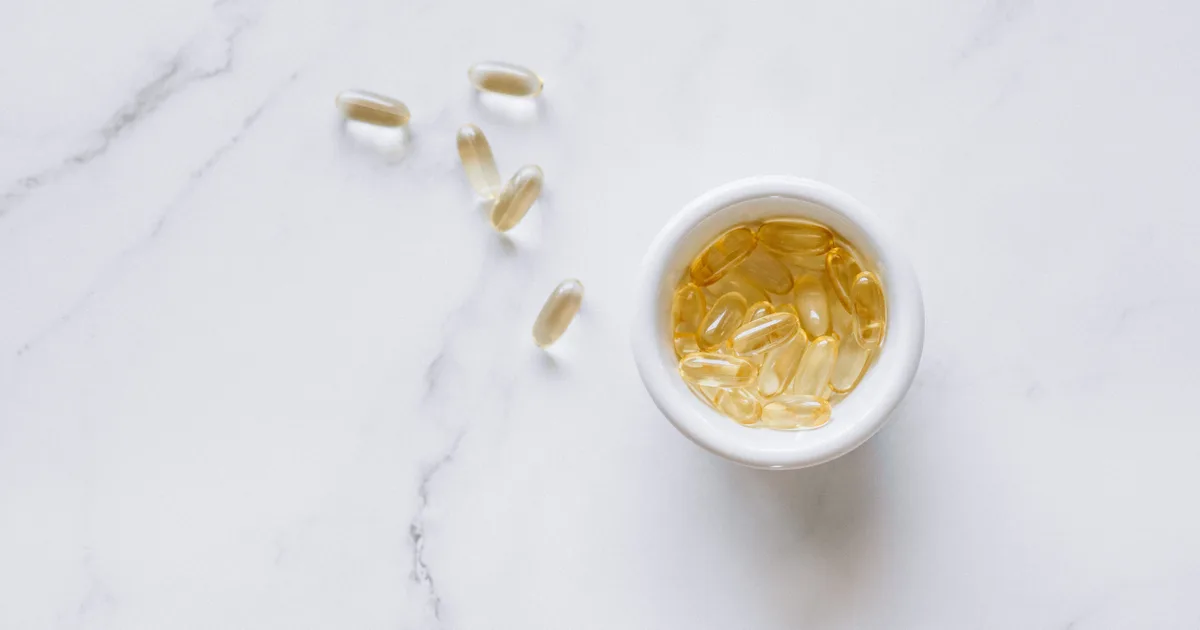
Standardized Serenoa repens Extract — 320 mg
Standardized liposterolic extract is the form used in the trials cited below · Still a dietary supplement, without a drug's level of evidence · Replaces neither a diagnosis nor a prescribed treatment
- Standardized liposterolic extract, not ground berry powder
- 320 mg is the amount used in the two-year head-to-head trial
- Expect the crown, not the frontal hairline
- Tell your doctor you take it, especially before a PSA test
from $18
See on AmazonAffiliate link
The trials, read line by line
Three studies come up in every sales pitch. They are real — I checked each one — and they are more interesting for what they fail to establish than for what they announce.
The 2002 study everyone quotes, and its design flaw
The first appeared in the Journal of Alternative and Complementary Medicine in 2002. Twenty-six men with mild to moderate androgenetic alopecia, randomized between a botanical product and placebo, over roughly five months. Reported result: improvement in 60% of the treated group against 11% on placebo.
That number is everywhere. What travels far less is the contents of the bottle. The product tested was not saw palmetto alone — it combined the extract with beta-sitosterol. When a two-ingredient formula produces a result, it cannot tell you which ingredient produced it. And the outcome rested on investigator judgment, not on counted hairs. Twenty-six men, a subjective endpoint, a combination product: that is a lead worth following. It is not a demonstration.
The two-year comparison, which gives the real order of magnitude
The second is the most useful one, and oddly the one sellers quote least. Published in the International Journal of Immunopathology and Pharmacology in 2012, it followed a hundred men with mild to moderate androgenetic alopecia for twenty-four months: one group on Serenoa repens 320 mg taken daily, the other on finasteride 1 mg.
Read the outcome slowly. Increased hair growth was seen in 38% of the men on Serenoa repens, against 68% on finasteride. And the difference was not only in size: finasteride acted on both the frontal area and the vertex, whereas Serenoa repens acted predominantly on the vertex.
Put that in plain terms. Somewhat more than one man in three sees something, against two in three on the drug — and that something happens mainly at the crown, the part you never see in the mirror, while the hairline you actually worry about carries on regardless.
Not nothing. Not much. That is the honest number, and it is the one to hold in mind at checkout.
The 2020 systematic review, and its careful verdict
The third is a systematic review published in Skin Appendage Disorders in 2020, pulling together the available dermatology work on saw palmetto. It reports encouraging figures — improved overall hair quality in 60% of subjects, around a 27% rise in total hair count, increased density in more than eight in ten, and stabilized progression in roughly half.
And in the same breath, it concludes that robust high-quality data are lacking.
That sentence is not throat-clearing. The pooled studies are largely open-label, small, frequently run on formulas containing more than saw palmetto, and short on the placebo control that would separate a real effect from a participant’s expectation. A systematic review does not manufacture evidence; it gathers what exists. When it closes like that, it is telling you exactly what you are buying — an arguable option, not a settled one.
The prostate detour that tells you most
Here is the argument I find most clarifying, and it doesn’t come from dermatology at all.
Saw palmetto is not a newcomer. It was studied for decades on its home ground: lower urinary tract symptoms from benign prostatic hyperplasia. And there, unlike on the scalp, we have plenty of trials — long, properly built, and pulled together in a Cochrane review, which is the methodological benchmark for this kind of question.
The 2012 version of that review is blunt: Serenoa repens was no better than placebo for urinary symptoms. And the detail that matters is what the authors add — at double and even triple doses, no improvement in urinary flow or prostate size.
Sit with what that means. On the indication where this plant had the longest history, the most patients studied and the best data, it did not hold up — and raising the dose changed nothing. That does not mechanically prove it is useless for hair: different tissue, different dominant enzyme, different story. But it sets a floor of caution. An anti-androgen that fails where it was best measured is unlikely to turn out powerful somewhere else, on far thinner evidence.
That is part of why I don’t file this supplement alongside a documented treatment. The same gap between a cosmetic-grade claim and a prescription-grade file shows up elsewhere on this site — Aminexil vs Minoxidil: Which One Actually Works? walks through an almost identical mismatch.
What the label is not required to prove
This part is specific to buying supplements in the United States, and it explains more about the aisle than any ingredient list will.
Dietary supplements here are governed by a 1994 law, the Dietary Supplement Health and Education Act. Under it, a supplement does not need FDA approval before it goes on sale. The manufacturer is responsible for the safety of its own product and for the truthfulness of its claims, and the FDA generally steps in afterward — once a product is already on shelves and something has gone wrong.
Notice what follows from that. Nobody had to prove this bottle works before selling it to you. Nobody had to publish a file. And the phrasing you see on the front — supports healthy hair, promotes thickness — is structure/function language, which is precisely the kind of wording allowed without the evidence a drug claim would demand. That is why every one of these boxes carries the small print about the FDA not having evaluated the statement.
None of this makes supplements a scam. It makes the burden of proof yours. When a company has no obligation to demonstrate anything, the trials it chooses to run — or not run — become the most informative thing about it.
Three habits cover most of the risk:
Look for “liposterolic extract” or a standardization figure. The trials above used a standardized extract, not dried, ground berry. A cheap capsule of fruit powder has no particular reason to behave like the tested product, however identical the Latin name looks on the front. That one line eliminates a good share of what’s on offer.
Check the amount, and don’t raise it on your own. The two-year comparison used 320 mg of extract. Nothing suggests going higher achieves anything — the Cochrane review specifically tested double and triple doses on the prostate with no benefit. Upping the dose because nothing is happening at three months is the most common and least founded reflex in this whole category.
Be wary of twelve-ingredient blends. They are everywhere and they have a structural defect: if something improves you will never know what to thank, and if something goes wrong you will not know what to stop. The same attribution problem dogs the best-selling hair-skin-nails formulas, as Does Biotin Work for Hair Loss? What It Does, and What It Distorts lays out — with an extra complication for biotin around blood test results.
The blind spot in the word natural
This is where the opening logic turns around on itself, and it is the most useful passage in this article.
Remember why that man came to saw palmetto: he refused finasteride over its side effects, mostly sexual. So he wanted something that works on the androgen pathway without the drawbacks of working on the androgen pathway.
That is a contradiction in terms. A product that genuinely touches this system can, by construction, produce effects from the same family. And in practice, reduced libido, breast tenderness and mood changes have been reported with saw palmetto. The difference from finasteride is not that they don’t happen — it is that they are looked for far less thoroughly, because a supplement is not under the same surveillance system as a drug.
So on this specific point, you are not swapping a risk for no risk. You are swapping a known, quantified, monitored risk for a poorly measured one. That is a different trade than the one people think they are making.
Three situations deserve genuine caution beyond that, and none of them are theoretical:
- A PSA test coming up. Saw palmetto can cloud the reading of a test whose whole purpose is catching a prostate problem early. The doctor ordering it needs to know what you take.
- A blood thinner, or scheduled surgery. Its reputation for affecting clotting is reason enough to put it in front of the surgeon and the anesthesiologist.
- Pregnancy, breastfeeding, hormonal contraception. Anything acting on androgens does not belong in those contexts without medical advice.
The habit that handles all of this is one sentence said in the exam room: name this supplement the way you would name a medication. The National Center for Complementary and Integrative Health makes exactly this point, and it is the most concrete piece of advice I can pass along.
Check: does saw palmetto make sense for you?
The numbers above say nothing about your situation. The same product can be a reasonable option, an expensive redundancy, or pure lost time depending on what is driving your hair loss and what you already take. Three questions settle it.
Check · 3 questions
Does saw palmetto make sense for you ?
Question 1 / 3
What does your hair loss actually look like ?
💡 Decision grid built by Thomas R., hair restoration specialist, from the trials cited at the end of this article. It points you somewhere; it does not diagnose. Any supplement decision belongs with your physician or pharmacist.
Limits and when to see someone
None of the above is medical advice, and this supplement replaces neither a diagnosis nor a treatment already under way. Three limits are worth stating plainly.
It addresses one kind of hair loss only. Androgenetic alopecia, telogen effluvium, alopecia areata and iron deficiency look alike from a distance and are managed in completely different ways. A weak anti-androgen makes no sense for the last three. Which is why the diagnosis comes before the purchase, not after — Balding in Your 20s: 5 Early Signs & How to Stop It covers the markers that identify a pattern.
It does not stand in for a medical decision. Declining finasteride is a legitimate choice, and it is one to say out loud to a doctor rather than route around quietly: other options exist, some of them topical, and they are only worth discussing in a consultation. Never change a treatment already in progress on your own.
Some signs call for prompt attention: sudden heavy shedding, sharply defined bald patches, a painful or red scalp, or accompanying symptoms — unusual fatigue, weight change, cycle changes. No supplement should be used to make those wait.
FAQ
Does saw palmetto regrow hair?
In some men with androgenetic pattern loss, improvement has been observed — a little over a third in the two-year head-to-head, against roughly two thirds on finasteride. So: possible, in a minority, and mostly at the crown. Promising certain regrowth would have no basis.
How long before you can judge it?
The hair cycle sets the pace. The trials run for months, and the one giving the most reliable order of magnitude ran for two years. Six months is a sensible minimum before concluding anything, with dated photos to back it up.
Can you combine it with minoxidil?
They work through different pathways, so pairing them is coherent on paper. In practice, adding a variable makes assessment impossible: if your density shifts, you won’t know what moved it. The minoxidil protocol and its shedding phase are covered in Minoxidil 5% for Men: Protocol, Results & Shedding Phase Explained, and it is better judged alone.
Is it useful for women?
The available data are overwhelmingly in men, and female hair loss often runs on other mechanisms. On top of that sits a precautionary contraindication in pregnancy, breastfeeding and hormonal contraception. This question belongs in a consultation, not in an aisle.
Can saw palmetto interfere with a test?
Yes, and it is the most important precaution in this article: it can distort the interpretation of a PSA result. Mention it to your doctor the way you would mention a medication — before the test, not after.
Does natural mean free of side effects?
No. Reduced libido, breast tenderness and mood changes have been reported. They are simply studied less than finasteride’s, because a supplement is not under the same monitoring. Less documented does not mean absent.
Sources
- Prager N, Bickett K, French N, Marcovici G. — A randomized, double-blind, placebo-controlled trial to determine the effectiveness of botanically derived inhibitors of 5-α-reductase in the treatment of androgenetic alopecia. Journal of Alternative and Complementary Medicine, 2002;8(2):143–152.
- Rossi A, Mari E, Scarnò M, Garelli V, Maxia C, Scali E, Iorio A, Carlesimo M. — Comparitive effectiveness of finasteride vs Serenoa repens in male androgenetic alopecia: a two-year study. International Journal of Immunopathology and Pharmacology, 2012;25(4):1167–1173. (PMID 23298508)
- Evron E, Juhasz M, Babadjouni A, Mesinkovska NA. — Natural Hair Supplement: Friend or Foe? Saw Palmetto, a Systematic Review in Alopecia. Skin Appendage Disorders, 2020;6(6):329–337. (PMID 33313047)
- Tacklind J, MacDonald R, Rutks I, Stark JU, Wilt TJ. — Serenoa repens for benign prostatic hyperplasia. Cochrane Database of Systematic Reviews, 2012;12:CD001423. (PMID 23235581)
- National Center for Complementary and Integrative Health (NCCIH) — Saw Palmetto: What the Science Says, fact sheet on effectiveness, safety and precautions, National Institutes of Health.